
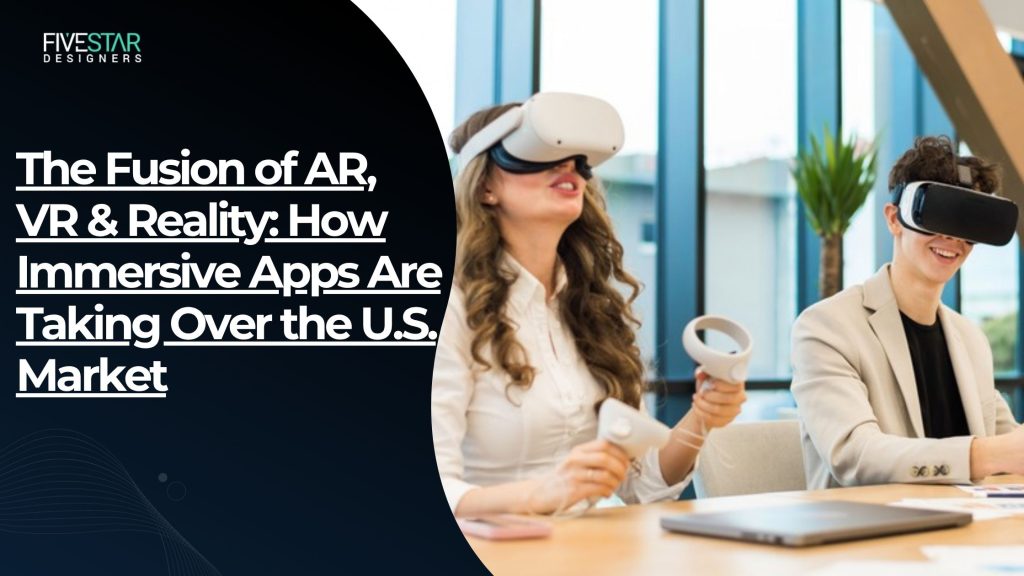
A New Way to See and Feel the Digital World actually feels unmatched. Think about the first time you used a phone map or watched a 3D game. Now imagine those moments feeling real, almost like you’re inside them. That’s what’s happening today. AR, VR, and mixed reality aren’t “future tech” anymore. They’re showing up in homes, malls, schools, and workplaces across the country.
People in the U.S. want apps that feel alive, not flat. That’s why AR and VR app development USA is growing so fast. And as we move into 2025–2026, more companies want apps that place digital objects right in front of us or take us into full 3D worlds. This shift is pushing immersive app development into a new phase.
The Market Shift: Why Immersive Apps Are Exploding in the U.S.
The Rise of Consumer Demand
People actually need apps that feel real and natural. They desire to try clothes at home and test furniture in their room. Or play games that feel like they’re part of their space.
Hardware Is Getting Better
New tech tools make this possible:
- Smart glasses.
- VR headsets.
- Phones with stronger chips.
- Better motion sensors.
How Brands Use AR Every Day
Stores in the U.S. now use augmented reality apps USA to help people test products at home. Makeup, shoes, glasses, you name it.
The Impact of 2025 Trends
Many AR/VR trends 2025 USA focus on faster apps, smoother motion, and safer use. This helps companies decide where to invest next.
Understanding the Tech Behind AR, VR & MR
Augmented Reality: More Than Filters
Augmented Reality, or AR, simply place the 3D objects to real places. It can be a game character on your table or a chair you want to buy.
Virtual Reality: Full Immersion
VR takes you into a space that feels real. It could be a classroom, a racecar, or a museum.
Mixed Reality: Both at Once
Mixed reality blends the two. It lets digital objects sit on real surfaces and stay there as you move.
Why These Layers Matter
Together, they help build stronger immersive app development tools. These tools allow apps to feel smooth, easy, and natural.
AR & VR in Action: Real Use Cases for U.S. Businesses
Retail & E-Commerce
Shoppers love:
- Virtual try-ons.
- AR store maps.
- 3D product views.
These features are becoming normal in malls and online shops.
Healthcare
Doctors use VR for training. Surgeons use AR guides to work with more accuracy.
Education & Training
Schools use VR lessons made by virtual reality app developers USA to help students learn in 3D worlds.
Real Estate & Architecture
Agents show 3D house tours. Designers use AR to place furniture or walls in real rooms.
Other Industries
Fitness, tourism, and cars all use AR and VR use cases for U.S. businesses to teach, train, and guide customers.
The Metaverse Factor: Connecting Digital and Real Spaces
How the Metaverse Shapes Design
Developers now plan for apps that connect with bigger virtual worlds.
Cross-Platform Experiences
One action can move across phone, glasses, and VR headsets.
The Future of Immersive Tech
Now let’s face the reality, more apps will blend worlds through metaverse and immersive tech in apps, making digital content feel part of daily life.
New Business Models
Brands now make virtual stores, events, and training rooms that stay online 24/7.
How Immersive Apps Are Transforming UX
Why These Designs Win
People feel these ideas quickly when they can see them in 3D.
Spatial Interactions
Despite of tapping or scrolling screens, users can walk, point, and interact with objects.
Behavioral Shifts
Most of the U.S. users expect apps to feel smoother and more real.
UX Is Evolving
This supports how immersive apps are changing UX across industries.
Ethics Matter
Security and privacy rules, safe spaces, and age filters are now essential.
Choosing the Right Development Partner
What to Look For
Find a team that knows AR, VR, and mixed reality well.
Key Developer Skills
Good virtual reality app developers USA understand 3D design and smooth motion.
Cross-Platform Knowledge
Apps should work on phones, glasses, and headsets.
Safe and Scalable
Your app should grow easily and protect user data.
Future Forecast: What’s Next in the U.S.
New Hardware + AI
Tools get smarter and respond faster.
Evolution Continues
The rise of AR and VR app development USA will keep growing.
Mixed Reality Ecosystems
More apps will run in open, shared spaces.
Apps May Replace Screens
Some apps may feel so real that flat screens feel old.
Wrap Up
Immersive technology is growing very fast across the U.S., and it’s not slowing down. New apps help people shop, learn, train, and explore in ways that feel real. Now’s the time for brands to join the shift and build experiences that fit how people live today.
Build Your Next Immersive Experience with 5StarDesigners.
5StarDesigners understands real user needs. They build apps that help brands grow and teach people in simple, smart ways. They work with AR, VR, MR, 3D, and AI to create apps that fit today’s digital world.
Ready to build an app that stands out?
Work with 5StarDesigners and bring your idea to life with smart and simple immersive tech.